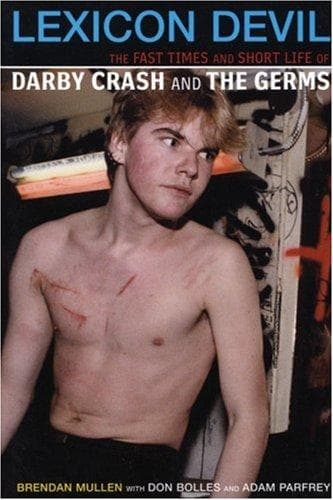
Lexicon Devil: The Fast Times and Short Life of Darby Crash and the Germs
An unvarnished, brutalist oral history of L.A.'s most dangerous punk band and their manipulative frontman.
The Birth of the L.A. Wasteland
Brendan Mullen ran The Masque. It was a filthy, urine-soaked basement hidden underneath a Hollywood porn theatre. Don Bolles played drums for the Germs and later bashed skins for 45 Grave. Adam Parfrey operated Feral House. He published apocalyptic sociology, weird occult texts, and extreme fringes of human depravity. Together, they stitched together Lexicon Devil: The Fast Times and Short Life of Darby Crash and The Germs in 2002. Los Angeles in the late 1970s was a wasteland of bad cocaine and desperate narcissism. Hippie idealism had curdled into Manson-esque paranoia. Kids with too much free time, zero prospects, and terrible diets needed a war. They found one in the concrete dirt of Hollywood.
Look at the architects behind this book. Mullen was the ringmaster of the L.A. punk explosion. He provided the physical space for the damage to occur, hosting bands that could not tune their guitars let alone play them. Bolles was in the literal trenches. He hit things with sticks while his lead singer bled out on stage in front of hundreds of apathetic kids. Parfrey thrived on the grotesque. He documented the darkest corners of human behaviour with clinical detachment. Together, they bypassed the sanitized revisionism that plagues most rock history. Please Kill Me gets the coffee table treatment in polite society. Lexicon Devil is a crime scene photograph. It smells like stale beer, vomit, and copper.
Before 1977, Hollywood was a cemetery of burned-out rock stars and stadium excess. The Eagles reigned supreme, polluting the airwaves with soft-rock poison. Fleetwood Mac snorted their body weight in white powder. It was abhorrent. Then came the rejects. Youths who could not play a C chord decided to destroy the musical establishment. Jan Paul Beahm was one of them. He would rename himself Bobby Pyn. Later, he became Darby Crash. A calculated, cynical rebranding. He attended University High School in West Los Angeles with Georg Ruthenberg, who became Pat Smear. They were enrolled in the Innovative Program School. This was a sick little "school-within-a-school" experiment. It was run by teachers heavily infected with the human potential movement and Scientology. They forced teenagers through Training Routines. Cult indoctrination funded by the board of education. Disgusting.
Crash absorbed every ounce of it. He realized words were actual weapons. You could manipulate lost, confused kids if you sounded confident and vaguely menacing. He learned to control his entire social circle using the rhetorical garbage he picked up at Uni High. Los Angeles punk was not born from working-class anger like the British scene. It was born from suburban boredom, sunshine-induced psychosis, and literal cult tactics. Crash built a gang, not a band. The Germs were just the propaganda wing for his own ego.
Mullen, Bolles, and Parfrey understood this grim reality. They did not write a hagiography of a fallen hero. They compiled an oral history featuring over a hundred voices. People who survived the chaos. John Doe, Belinda Carlisle, Jello Biafra. They all throw their fractured memories onto the pile. Some contradict each other. Some outright lie. That is the beauty of it. Memory is unreliable. The truth is usually found in the friction between two conflicting, drug-addled accounts. The authors leave the mess completely intact. They do not hold your hand. You have to wade through the vomit and the needle marks yourself.
Cult Mechanics and Safety Pins
Cult mechanics run through this book like a diseased spinal cord. Crash was not a tortured genius. He was an insecure, hyper-literate kid who read too much Nietzsche and obsessively studied David Bowie lyrics. He wanted to be a fascist dictator of the underground. He demanded absolute loyalty. The infamous "Germs burns" were cigarette burns inflicted by Crash himself on the wrists of his followers. A literal brand. A mark of ownership. Kids lined up around the block for it. Sickening. It shows how desperate they were to belong to something, even if that something was a self-destructing junkie in a leather jacket.
Music was entirely secondary to the operation. The Germs' early shows were riots of noise, blood, and flying glass. Crash rarely bothered to sing into the microphone. He covered himself in peanut butter, broken bottles, and whatever garbage was on the stage. He baited the audience. Joan Jett, who had just survived the wreckage of The Runaways, saw something salvageable in the filth. She recognized a twisted songwriting talent buried under the deafening feedback. She stepped in to produce their only studio album, (GI), in 1979. She applied the technical discipline she learned on the road to force the band to actually play their instruments. It miraculously worked. The record sounds like a buzzsaw cutting straight through human bone. Hard. Unforgiving.
But the book focuses far less on the chords and far more on the brutal psychology. The authors rip away the punk messiah myth. We see a manipulative brat whose legend severely outpaced his actual output. He lied constantly to build his aura. One specific anecdote reveals he claimed to have watched a Peter Frampton concert from backstage, constructing an elaborate, detailed lie to seem important. His friends had seen him sitting at home at the exact same time. It is pathetic. Yet, it highlights his relentless, exhausting need to build his own mythology. He treated his life as a piece of cheap performance art. The problem with making your life a piece of performance art is that you eventually have to provide a grand finale.
The social wasteland described by the hundred-plus interviewees is genuinely terrifying. Late-1970s Hollywood was an active hunting ground. Runaways, teenage hustlers, and predatory drug dealers collided in the Masque and at the neon-lit Oki Dog stand. The Germs' circle was a closed loop of self-abuse and codependency. Crash weaponized his intellect against his own friends. He used the Scientology Training Routines to paralyze his peers in circular arguments. He demanded absolute submission. If you questioned his authority, you were immediately exiled. It was a textbook cult operation. Just with safety pins and ripped shirts instead of white robes.
Bolles brings a crucial, devastating insider perspective to the text. He actually played the drums on (GI). He saw the structural rot from the inside. His specific contributions to the book strip away any lingering romanticism. He talks about the endless, frustrating rehearsals. The squalor of their living conditions. The desperate, gnawing need for heroin. The drug became the new dictator, replacing Crash. Crash lost control of his own cult when the needle fully took over. The sharp, manipulative kid from Uni High turned into a nodding, useless ghost. The book does not spare him any dignity. It documents his physical and mental decline with cold, clinical precision. It is a very hard read. You sit there and watch a bright, twisted mind dissolve into a puddle of brown liquid.
When you read the transcripts of the interviews, the sheer level of cognitive dissonance is staggering. Belinda Carlisle—known then as Dottie Danger—was the band's original drummer for about five minutes. She got out early. She went on to front The Go-Go's and score massive pop hits. Her recollections in the book provide a bizarre, sunny contrast to the surrounding misery. She talks about the scene like it was a slightly dangerous high school clique. Meanwhile, other contributors describe stabbings, overdoses, and rampant sexual exploitation. It perfectly illustrates how two people can stand in the exact same room and experience two entirely different realities.
The Final Joke
The recording sessions for (GI) are documented with excruciating detail. Jett forced them to do multiple takes. Crash hated it. He wanted everything to be a spontaneous explosion of garbage. Jett understood that if the record sounded like total mud, no one would ever hear his precious lyrics. The tension between Jett’s professionalism and the band’s chaotic incompetence is one of the funniest subplots in the entire oral history. Bolles confirms that without her, they would have just released unlistenable static.
Another terrifying element the book explores is the role of the older, parasitic hangers-on. The punk scene was full of thirty-something creeps who preyed on the runaway teenagers. These predators bought the drugs, supplied the alcohol, and provided the crash pads in exchange for access to the kids. Crash exploited these people just as much as they exploited him. He used them for resources while despising them. It was a symbiotic relationship built entirely on mutual disgust and addiction. The authors refuse to look away from this statutory nightmare. They name names. They let the guilty hang themselves with their own quotes.
Feral House unleashed the book upon the world in 2002. It immediately tore through the underground scene. Critics loved it. They called it the definitive, undisputed L.A. punk document. It is raw. It actively hurts to read. It successfully avoids the polished nostalgia of mainstream documentaries that sanitize the era for a wider, softer audience. The controversy stems directly from its brutal honesty. Some survivors hated how they were portrayed in print. They felt their sacred memories were twisted or that Crash was stripped of his necessary dignity. What dignity? He died alone in a dingy room with a dirty needle stuck in his arm.
His suicide on December 7, 1980, was a final, highly calculated move. He overdosed intentionally. He wanted to die a legendary rock martyr. He timed it perfectly, or so his drug-addled brain thought. He wanted to dominate the front pages of the world. The very next day, Mark David Chapman shot John Lennon outside the Dakota building. Crash was instantly relegated to a minor footnote in the local news. A cruel, hilarious cosmic joke. The universe did not care about the self-appointed king of the Germs. The book captures this bitter irony perfectly. All that manipulation, all that endless legend-building, erased in an instant by a depressed Beatle fan.
The true impact of Lexicon Devil lies in its relentless demystification of the punk rock mythos. It forces you to look directly at the grime under the fingernails of rock history. The Germs influenced thousands of terrible bands. Their blue circle logo is tattooed on countless suburban arms. Pat Smear went on to play with Nirvana and the Foo Fighters, carrying the surviving DNA of the ruined band into massive mainstream stadiums. But the book ensures we never forget the sordid, desperate reality of their true origin. They were not working-class heroes. They were heavily damaged kids playing in the radioactive ruins of a failed society.
Mullen, Parfrey, and Bolles created a grim, towering masterpiece. They rushed to record the voices before the drugs and time took them all to the grave. The book stands as an unyielding archive of a specific, localized madness. You read it and you feel the literal claustrophobia of the L.A. scene closing in on your lungs. The incestuous relationships. The constant, petty betrayals. The staggering, unearned narcissism. It destroys the comforting idea that punk was a pure, unified rebellion against the state. It was nothing more than a chaotic mess of competing egos and severe, untreated mental health issues.
No other book captures the fatalism of late-70s youth culture quite like this one. It remains the absolute gold standard for music oral history because it completely refuses to apologize for the monsters it portrays. It just dumps the ugly facts on the surgical table and walks away.
"Darby Crash was a user of people, a manipulator who read too much and understood too little." — Brendan Mullen
The Personnel
- Darby Crash (Jan Paul Beahm) - Vocals, Cult Leader
- Pat Smear (Georg Ruthenberg) - Guitars, Survivor
- Lorna Doom (Teresa Ryan) - Bass
- Don Bolles - Drums
- Dottie Danger (Belinda Carlisle) - Drums (Briefly)
Essential Discography
- (GI) (1979)
- Lexicon Devil EP (1978)
- What We Do Is Secret EP (1981)
Archivist Notes: Lexicon Devil: The Fast Times and Short Life of Darby Crash and the Germs
About The Helter Skelter Archive
We are dedicated to preserving the raw, unfiltered history of rock music. Rejecting modern sanitized narratives, our editorial desk digs into out-of-print fanzines, rare biographies, and the chaotic history of the artists who built the culture. No AI rewrites, no corporate spin.
Join The Underground
Get rare archival footage, out-of-print fanzine scans, and exclusive reviews delivered to your inbox.
No spam. Just pure rock history.