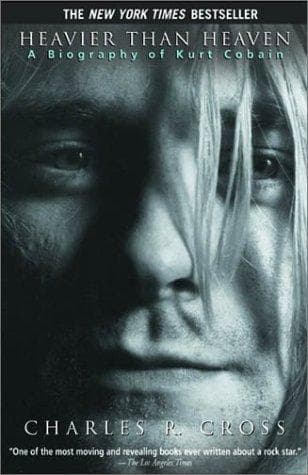
Heavier Than Heaven
A brutal, definitive excavation of the Kurt Cobain mythos, stripping away the MTV varnish to reveal the grim reality of Seattle's most famous casualty.
The Aberdeen Sediment
Charles R. Cross was no mere stenographer for the Seattle grunge machine. He ran The Rocket. That was the ragged, definitive regional rag that actually documented the Pacific Northwest squall before Geffen Records arrived with chequebooks and sanitized PR drivel. Cross died in 2024. But back in the day, he was the guy watching the feedback-drenched chaos from the ground floor. Before the flannel became high fashion. Before MTV commodified the alienated shrieks of Aberdeen’s most famous outcast. Heavier Than Heaven arrived in August 2001. A strange time. Nu-metal was dominating the airwaves. The raw, jagged ethos of 1991 felt like a distant, distorted memory. Corporate rock had repackaged angst into a highly profitable, neatly shrinking demographic. So, what did Cross do? He spent four years clawing through the myth. Four years. Over four hundred interviews. He dug through the sediment of Kurt Cobain’s short, hyper-scrutinized life. This was not some cash-in retrospective. Cross secured access to Cobain’s private journals. Unseen lyrics. Crude sketches. Courtney Love handed him the keys to the vault. Some journalists balked at that connection. They screamed bias. They yelled about subjectivity. Cross ignored them. He needed the primary source material to cut through the suffocating layer of martyrdom that had calcified around Cobain since April 1994.
The cultural backdrop of 2001 demanded a corrective text. Cobain had been dead for seven years. Posters of his face, eyes deadened, hung in teenage bedrooms globally. He was Saint Kurt. The reluctant voice of a generation. A flat, one-dimensional icon of tragic self-destruction. The actual human being—viciously funny, wildly ambitious, entirely contradictory—was lost in the hagiography. Cross knew this. He watched the myth consume the man. So he sat down to write. To strip the varnish off the icon. He interviewed friends, enemies, dealers, and bandmates. Noticeably absent? Dave Grohl. Cobain’s mother, Wendy O'Connor. They wanted no part of it. Silence speaks volumes. But Cross ploughed forward. He tracked down the forgotten players in Aberdeen. The lumber-town purgatory that forged Cobain's resentment. The town that rained constantly. A bleak, oppressive environment. It was here that the initial sparks of Nirvana's furious sludge were lit. The title itself, Heavier Than Heaven, is a cynical inside joke. It originates from a UK tour Nirvana did with Tad. The promoters coined the phrase to mock Tad Doyle's colossal weight. It wasn't about spiritual transcendence. It was a fat joke. That is the exact kind of black, gallows humour Cobain adored. And it perfectly encapsulates the grim reality Cross set out to capture. The book was a brutal excavation of a scene that had been retroactively polished by corporate narrators. It was about dirty vans. Heroin. Stolen gear. Cheap beer. Cross refused to romanticize the squalor. He documented it with forensic, clinical detachment. He went back to the roots. The Melvins. The early, terrifying gigs in empty halls. The sonic violence that predated the polished sheen of Nevermind. Cross understood that you could not comprehend Cobain without understanding the absolute desolation of his origins. The suffocating boredom of a dying logging town. The desperation that drove a generation of Pacific Northwest kids to plug in cheap guitars and scream until their throats bled.
Dismantling the Bridge
What exactly did Heavier Than Heaven reveal? The truth. Naked, ugly, and largely unpalatable to the MTV generation. Cross dismantled the carefully constructed slacker myth. Cobain did not stumble into fame. He wanted it. He craved validation. He meticulously plotted Nirvana's ascent. The narrative of the accidental rock star was a calculated pose. Cross proves this. He shows Cobain calling MTV, complaining about video rotation. He details the intense ambition burning beneath the ripped cardigans. This was a man who wanted to dethrone Michael Jackson. And he did. But the cost was catastrophic. The biography meticulously tracks the chemical dependency. It is a grim, agonizing timeline. Cross doesn't spare the details. The heroin wasn't a romanticized escape; it was a miserable, grinding necessity. The stomach pain. The canceled tours. The desperate interventions. It reads like a slow-motion car crash.
"I don't have the passion anymore, and so remember, it's better to burn out than to fade away." — Kurt Cobain, Suicide Note
Perhaps the most significant revelation was the destruction of the "bridge myth." For years, fans believed Cobain lived under the Young Street Bridge in Aberdeen. It was the subject of the song "Something in the Way." A cornerstone of the Cobain mythology. The tortured artist, sleeping in the mud. Cross shattered it. It was a physical impossibility. The tidal movements of the Wishkah River would have drowned him. Cobain fabricated the story. He mythologized his own suffering. Cross exposed the lie, not to diminish Cobain, but to highlight his desperate need to craft his own tragic narrative. He was the architect of his own folklore. The book also examines the deep, unresolved trauma of his parents' divorce. It was the central wound. The fracture that never healed. Cross portrays a child obsessed with rejection. A man who perceived betrayal in every interaction. The chronic stomach condition, often cited as the primary reason for his drug use, is analyzed with medical detachment. Was it psychosomatic? Was it exacerbated by the heroin? Cross presents the evidence. The doctors found nothing structurally wrong. The pain was real, but its origin was a black hole.
Then there is the access to the journals. The unvarnished, chaotic scribblings of a deteriorating mind. Cross uses them judiciously. They are not presented as profound poetry. They are evidence. Angry letters to management. Drafts of lyrics. Rants about the press. The picture that emerges is of a man trapped in a prison of his own construction. He despised the corporate machinery of the music industry, yet he desperately needed its reach. He hated the mainstream audience that consumed his music, yet he craved their adoration. The cognitive dissonance was deafening. The relationship with Courtney Love is presented with raw, uncomfortable intimacy. Cross doesn't shy away from their toxic codependency. The drug binges. The hotel trashing. The intervention attempts that spiraled into violent confrontations. Some critics accused Cross of relying too heavily on Love's perspective. After all, she controlled the estate. She provided the journals. But the facts he presents are corroborated by hundreds of other interviews. The picture is coherent. And it is entirely devoid of romance. It is a clinical breakdown of a spectacular collapse. Every missed rehearsal. Every lied-about rehab stint. Every frantic, terrified phone call from management. Cross lays it out chronologically, refusing to let the reader look away from the absolute squalor that underpinned the multi-platinum success.
The Greenhouse Speculation
The legacy of Heavier Than Heaven is complicated. It remains the definitive biographical text on Kurt Cobain. It set the standard for modern music biographies. It discarded the PR fluff. It embraced the darkness. But it was not without its detractors. The final chapter remains a lightning rod for criticism. Cross made a highly controversial decision. He fictionalized Cobain's final hours. He wrote a speculative, imaginative reconstruction of the suicide. He detailed the final thoughts. The last movements in the greenhouse. Critics tore into this. They called it presumptuous. They called it a gross violation of journalistic integrity. How could Cross possibly know what Cobain was thinking in his final moments? He couldn't. It was a jarring departure from the meticulous, fact-based reporting that characterized the previous 300 pages. It left a bitter taste for many purists. It blurred the line between history and historical fiction.
Despite this massive misstep, the book's impact on music history is colossal. It forced a re-evaluation of the Seattle scene. It stripped away the cartoonish veneer of grunge. It laid bare the devastating human cost of sudden, uncontrolled fame. Before Heavier Than Heaven, biographies of alternative musicians were often fawning, superficial affairs. Cross changed the rules. He proved that rock journalism could be rigorous. That it could demand accountability. That it didn't have to function as a promotional arm for the record label. The book was a massive commercial success. It spawned numerous re-editions. It won the 2002 ASCAP Award for Outstanding Biography. But most crucially, it forced the world to look at Kurt Cobain not as a symbol, but as a deeply flawed, physically ill, and intensely ambitious human being.
The controversies surrounding the book only fueled its notoriety. The complaints about Love's influence. The anger over the fictionalized ending. The frustration from the grohl camp. All of it served to cement the book's status as essential reading. If it hadn't angered people, it wouldn't have been accurate. The truth about Nirvana was inherently abrasive. The reality of Cobain's life was a jagged, ugly thing. Cross captured that ugliness. He refused to smooth the edges. The music industry has spent the last three decades trying to sanitize the 1990s. They sell vintage Nirvana t-shirts at high-street fashion chains. They license the songs for blockbuster movie trailers. They want the aesthetic without the agony. Heavier Than Heaven stands as a massive, heavy roadblock against that revisionism. It is a detailed, unsparing record of the damage. Charles R. Cross died in 2024. But his work remains. A cold, hard slab of reality in a sea of corporate myth-making. It is a book that refuses to let the reader off the hook. It demands that we acknowledge our complicity in the destruction of our idols. We bought the records. We demanded the tours. We consumed the pain. Cross documented the final invoice. As the Aberdeen sky dumped freezing rain on the Wishkah River, the truth was already locked in print. He never lived under that bridge. He just wanted you to think he did.
The Personnel
- Author: Charles R. Cross
- Subject: Kurt Donald Cobain
- Key Informants: Courtney Love, Krist Novoselic
- Notable Absences: Dave Grohl, Wendy O'Connor
Essential Discography
- Bleach (1989)
- Nevermind (1991)
- In Utero (1993)
- MTV Unplugged in New York (1994)
Archivist Notes: Heavier Than Heaven
About The Helter Skelter Archive
We are dedicated to preserving the raw, unfiltered history of rock music. Rejecting modern sanitized narratives, our editorial desk digs into out-of-print fanzines, rare biographies, and the chaotic history of the artists who built the culture. No AI rewrites, no corporate spin.
Join The Underground
Get rare archival footage, out-of-print fanzine scans, and exclusive reviews delivered to your inbox.
No spam. Just pure rock history.