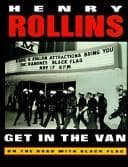
Get in the Van: On the Road with Black Flag

Get in the Van: On the Road with Black Flag

A brutal, uncompromising diary of the American underground.

HS.UK
Author: The London Archives
Filed: 1994-01-01

The D.C. Meat Grinder

Henry Rollins was just a kid working at a Häagen-Dazs in Washington D.C. when the sickness called Black Flag grabbed him by the throat. It was 1981. Hardcore punk was a feral, starving animal, prowling the underground, feeding on teenage angst, Reagan-era paranoia, and the rotting corpse of 1970s arena rock excess. Black Flag, spawned in Hermosa Beach, California, by the obsessive, draconian guitarist Greg Ginn, was the absolute apex predator of this scene. Nobody played harder. They played with a terrifying, homicidal intensity.

Rollins wasn't a poet. He wasn't a trained musician. He was a weapon. A hyper-intense, muscular, furious kid who had memorized every syllable of Black Flag's early EPs. When the Hermosa Beach crew rolled into New York City in the spring of 1981, playing a chaotic gig, Rollins leapt onstage, grabbed the microphone, and screamed out an encore. It was a baptism in sweat and spit. Ginn saw something in that furious D.C. kid. Days later, Rollins was recruited. He abandoned his minimum-wage existence, moved to Los Angeles, and was shoved headfirst into a relentless touring machine.

The transition from his life in D.C. to California was jarring. D.C. had its own hardcore scene—bands like Bad Brains and Minor Threat were rewriting the rules—but the West Coast was a different beast entirely. Los Angeles punk was infested with beach town nihilism, gangs, and a seething, undirected rage. Rollins wasn't just joining a band; he was enlisting in a localized war. The police in Southern California treated punks like a violent street gang, and Black Flag was public enemy number one. Their shows were frequently shut down by riot police equipped with batons and tear gas. The paranoia was constant. They couldn't walk down the street without the threat of a physical altercation. Ginn’s response was not to retreat, but to push harder. To tour endlessly. To spread the infection beyond the borders of California.

The cultural context of the early 1980s underground cannot be overstated. It was brutal. There was no internet, no social media, no Spotify playlists gently introducing suburban kids to subversive culture. Hardcore was passed around via staticky cassettes, xeroxed zines, and whispered rumors. To be in a punk rock outfit meant declaring war on society. Cops hated you. Normal kids wanted to beat you up. Club owners ripped you off. Nobody, absolutely nobody, was making any money. Black Flag existed in a state of perpetual poverty, starvation, and violence. They lived in squalor. They rehearsed until their hands bled. Ginn demanded absolute obedience and relentless labor.

This specific environment birthed Get in the Van. Rollins didn't set out to write a literary masterpiece. He was trying to survive. He kept journals. Smudged, furious, barely legible notebooks filled with the venom and bile of a young man trapped in a rolling torture chamber. The van was their home, their prison, and their sanctuary. They drove through the night, across endless, bleak American highways, subsisting on dog food, peanut butter, and unfiltered hatred.

Unicorn Studios housed the misery during the late 1981 recording of Damaged in Santa Monica. Unicorn Records, their distributor, owned the facility. The sessions were agonizing. Ginn was a tyrant. He once duct-taped headphones to his head to keep them from flying off during a manic take of "Jealous Again" earlier on, and that exact psychotic energy permeated every note recorded thereafter. Rollins had to match that intensity. He had to scream until his vocal cords shredded. He had to bleed. The journals captured it all. The beatings by skinheads. The police harassment. The soul-crushing boredom of endless driving. The agonizing hunger. Hardcore was becoming codified, rigid, dominated by violent meatheads who didn't understand the complex, sludgy, experimental direction Ginn wanted to pursue. Rollins documented the shift. He wrote down the pain.

Autopsy of the American Dream

The core text is not a celebration of rock stardom. It is an autopsy. It dissects the corpse of independent music, ripping out the organs to show you the rot. Rollins reveals the inner workings not as a collective, but as a grueling, masochistic cult. Greg Ginn is the shadow hanging over every page. Ginn is depicted as an uncompromising visionary, but also a cold, calculating dictator who viewed his associates as expendable cogs in an abrasive machine. The book dismantles the romanticized myth of DIY ethics. There was nothing romantic about it. It was exhausting, unrewarding, and physically destructive.

Rollins's journals from 1984 are particularly revealing. This was a record-breaking year of sheer, terrifying output. The crew recorded three full-length albums: My War, Family Man, and Slip It In. They played over 170 shows. The physical toll was unimaginable. Rollins writes of waking up on urine-soaked floors, of fighting violent skinheads who showed up just to cause bodily harm, of the sheer, soul-destroying isolation of being constantly surrounded by people who hate you. The revelations are grim. Brotherhood was an illusion. The interpersonal warfare was toxic. Members like Chuck Dukowski, Kira Roessler, and Bill Stevenson rotated in and out, crushed by the demands of Ginn's relentless work ethic and the bleak reality of their existence.

The recording process for My War was a clinic in psychological torment. The first side of the record retained some of the frantic energy of their earlier work, but the B-side—three songs clocking in over six minutes each—was a monolithic slab of grief. Tracks like "Nothing Left Inside" and "Scream" required Rollins to dig into reserves of emotional trauma he barely knew he possessed. He wasn't just singing; he was performing an exorcism in real-time. Ginn’s guitar work on these tracks sounded like sheet metal being torn apart. The rhythm section, anchored by the exhausting, precise drumming of Bill Stevenson, provided a death march tempo. When they took this material on the road in 1984, the backlash was immediate and violent. Punks who had shown up to slam dance to two-minute blasts of adrenaline were confronted with a crawling, agonizing dirge. They rebelled. Fights broke out constantly. Rollins fought the crowd physically and verbally. He became a lightning rod for the audience's confusion and anger, standing shirtless on stage, covered in spit and sweat, daring them to do their worst. The journal entries from this era are particularly bleak, documenting the nightly ritual of going to war with the very people who claimed to support them.

Crucial to the text is the detailed analysis of the sonic evolution. The narrative charts the transition from the hyper-speed thrash of the early days to the slow, torturous, Black Sabbath-influenced sludge of My War and beyond. Rollins notes how the audience reacted. They hated it. The punk purists felt betrayed. They spat on Rollins. They threw garbage. They wanted the fast, simplistic anthems. The musicians refused to capitulate. They pushed harder, played slower, and embraced the hostility. The tension in the studio translated to the mix. In a brutal reflection of their internal strife, Ginn would sometimes intentionally mix Rollins' vocals extremely low, burying the singer's furious lyrics beneath layers of screeching, agonizing guitar feedback. It was a power play, documented in real-time.

Rollins's prose is raw, untutored, and visceral. He doesn't polish the grit. He describes the filth, the disease, the gnawing hunger. The sheer volume of violence is staggering. Every gig is a potential riot. Every cop is an enemy combatant. The van itself becomes a claustrophobic hellscape, smelling of unwashed bodies, rotting food, and stale beer. It is a psychological horror story masquerading as a tour diary. You feel the exhaustion seeping off the pages. You feel the alienation. Rollins slowly transforms from a starry-eyed fan into an armored, cynical, rage-filled frontman who despises the audience as much as they despise him. Survival was the only victory. Barely.

Archive Snapshot

The narrative arc descends rapidly into pure misanthropy. The 1985 and 1986 entries, covering the Loose Nut and In My Head eras, show a unit completely fractured. The silence in the van is deafening. They don't speak to each other. They just execute the mission. The sheer bleakness of these final chapters strips away any remaining illusion that music is a unifying force. Music was a weapon. Eventually, they turned it on themselves. The diary entries become shorter, punchier, completely devoid of hope. Just dates, locations, injuries, and a burning, inextinguishable hatred for the world.

The Institutionalization of Noise

The legacy of this book is a massive, jagged scar across the face of music literature. When it was finally published in 1994, it dropped like a cinderblock into a scene that had already been corporatized. Grunge had exploded. Nirvana, Pearl Jam, and Soundgarden were on MTV. Punk had been commodified, packaged, and sold to the masses in neat, safe little boxes. This text was a violent reminder of what the underground actually looked like before the major labels swooped in with their checkbooks. It was ugly. It was dangerous. It was real.

The book also serves as a crucial historical document of the SST Records empire. Ginn and Dukowski built SST from nothing, operating out of storefronts and utilizing the van not just for touring, but as a mobile distribution centre. They bypassed the traditional music industry completely. Rollins’s diary captures the sheer logistical nightmare of this endeavor. Selling records out of the trunk of a car. Calling distributors from payphones at truck stops in the middle of the night. Getting stiffed by promoters in flyover states. It was a masterclass in independent business, executed by kids who were severely sleep-deprived and malnourished. This blueprint would later be adopted by countless independent labels—Dischord, Touch and Go, Sub Pop—but Black Flag wrote the manual in blood. When the alternative rock boom of the 1990s generated millions for bands mimicking Black Flag's abrasive aesthetic, the grim reality presented in Get in the Van served as a stark contrast. The pioneers got the arrows; the settlers got the land. Rollins watched the commercialization of his youth with a jaundiced eye.

"We are not a band, we are a paramilitary organization." — Henry Rollins, Get in the Van

A deeply ironic twist arrived when the audio version secured the Grammy Award for Best Spoken Word Recording in 1995. Here was Rollins, recounting tales of sleeping in dirt, fighting off murderous cops, and surviving on dog food, receiving a golden gramophone from the very industry his former peers existed to subvert and destroy. It highlighted the absurd trajectory of underground culture. The establishment eventually consumes its dissidents, wrapping them in awards and critical acclaim long after the blood has dried. The physical text resisted assimilation. It remained too harsh, too unforgiving.

Controversies surrounded the publication. Greg Ginn, the architect of the noise, was notoriously silent, but the fractures exposed within these pages permanently damaged the mythos of the group. Former members were forced to confront a heavily subjective, deeply personal version of events. It wasn't an objective history. It was one man's war diary. Some accused Rollins of self-aggrandizement, of painting himself as the sole martyr in a collective struggle. The truth, as always in rock and roll, is fractured. The impact of the book is absolute. It became the sacred text for every kid who ever picked up a guitar and thought about climbing into an Econoline van to tour the country.

This diary changed music history by demystifying it. Rock autobiographies were previously glossy, ghostwritten affairs detailing groupies, limousines, and drug-fueled epiphanies. Rollins offered a brutalist alternative. He showed the sweat, the accounting, the logistical nightmares, and the physical degradation. He proved that you didn't need to be a god to play rock music; you just needed an inhuman tolerance for suffering. The book paved the way for a new kind of raw, unvarnished music journalism, directly influencing the next generation of hardcore and emo bands who viewed the road not as a path to glory, but as a crucible. It stripped the glamour from the noise. It left nothing but the ringing in your ears and the bruises on your ribs.

Rollins’s document remains a staggering achievement of endurance. It sits on the shelf next to the great works of American masochism. You read it and wonder how anyone survived. Pressing records and altering the DNA of modern heavy music seems like a statistical impossibility when viewed through the lens of this diary. The sheer volume of obstacles—legal battles with Unicorn Records, police raids, internal mutinies—would have destroyed a lesser entity in weeks. They lasted years. It is a historical record of a time when independent music was a genuine threat to the social order. You can smell the stale sweat in the binding. You can hear the feedback screaming out of the text. On August 7, 1986, Ginn called Rollins. He said he was quitting his own band. The van was finally empty.

The Personnel

  • Henry Rollins - Vocals, Journalist, Survivor
  • Greg Ginn - Guitar, Mastermind, Dictator
  • Chuck Dukowski - Bass, Ideologue
  • Kira Roessler - Bass, Endurance Specialist
  • Bill Stevenson - Drums, Rhythmic Anchor

Essential Discography

  • Damaged (1981)
  • My War (1984)
  • Slip It In (1984)
  • Loose Nut (1985)

Archivist Notes: Get in the Van: On the Road with Black Flag

Absolutely. Written by Henry Rollins, this book is considered a monumental piece of literature in the rock archive. It offers unfiltered access to the era and is a must-read for any serious collector.
HS

About The Helter Skelter Archive

We are dedicated to preserving the raw, unfiltered history of rock music. Rejecting modern sanitized narratives, our editorial desk digs into out-of-print fanzines, rare biographies, and the chaotic history of the artists who built the culture. No AI rewrites, no corporate spin.

Join The Underground

Get rare archival footage, out-of-print fanzine scans, and exclusive reviews delivered to your inbox.

No spam. Just pure rock history.